
Humivera: The Eternal Energy of Soil
Introduction to Humivera
Humivera is a pioneering bio-stimulant derived from the ancient deposits of leonardite, a naturally occurring form of oxidized lignite. Over the centuries, these deposits have undergone significant geological and biochemical transformation, culminating in the rich organic matter that we recognize as humic acid. Humic acid plays a crucial role in soil health, serving as a vital component that enhances nutrient availability and improves the physical and biological properties of soil.
Formulated to revitalize soil fertility, Humivera integrates these principles by harnessing the power of humic substances. The utilization of Humivera in agriculture seeks to address the growing concern of soil degradation and diminishing fertility caused by intensive farming practices. As soils become depleted of essential nutrients, the need for effective bio-stimulants like Humivera becomes increasingly important.
Modern agriculture faces numerous challenges, including soil erosion, nutrient imbalances, and declines in crop productivity. Incorporating humic acid, a key element of Humivera, has been shown to enhance soil structure, promote microbial activity, and increase the efficiency of fertilizers. By doing so, it enables crops to access vital nutrients more effectively, thereby supporting healthier plant growth and higher yields.
Furthermore, the relevance of humic acid in contemporary farming cannot be understated. Its ability to chelate nutrients allows for improved mineral absorption, contributing to robust crop development and resilience against environmental stressors. As farmers strive to implement sustainable practices, the adoption of bio-stimulants like Humivera positions them to not only enhance productivity but also to cultivate a more environmentally friendly approach to agriculture.
Understanding Humic Acid and Its Benefits
Humic acid is a complex organic compound that plays a significant role in maintaining soil health and fertility. It is primarily derived from the decomposition of organic matter, such as plant and animal residues, in soil. This transformation results in a rich, dark substance that enhances the physical, chemical, and biological properties of the soil. One of the most remarkable features of humic acid is its ability to increase nutrient availability for plants, which is paramount for healthy growth.
From a biological perspective, humic acid acts as a chelating agent, helping to bind essential nutrients like nitrogen, phosphorus, and potassium, which plants require for optimal development. This chelation process increases the nutrient uptake efficiency, enabling plants to absorb maximum minerals required for photosynthesis and overall vigor. Consequently, farmers and gardeners often report improved crop yields and enhanced fruit and vegetable quality when humic acid is incorporated into their soil management practices.
Chemically, humic acid contributes to improving soil structure through the formation of aggregates. These aggregates enhance aeration and water retention capacity of the soil, which is crucial in maintaining moisture during dry periods. The improved soil structure not only facilitates root growth but also supports beneficial soil microorganisms, further enhancing soil fertility and plant health.
A plethora of scientific studies has corroborated these benefits of humic acid in agriculture. Many researchers highlight not just the agronomic advantages but also the environmental benefits of using humic substances in sustainable farming. Testimonials from farmers worldwide echo these findings, often citing less reliance on synthetic fertilizers due to the increased efficiency derived from humic acid applications. By integrating humic acid into agricultural practices, cultivators can foster healthy ecosystems, leading to sustainable development in soil management.
The Composition of Humivera
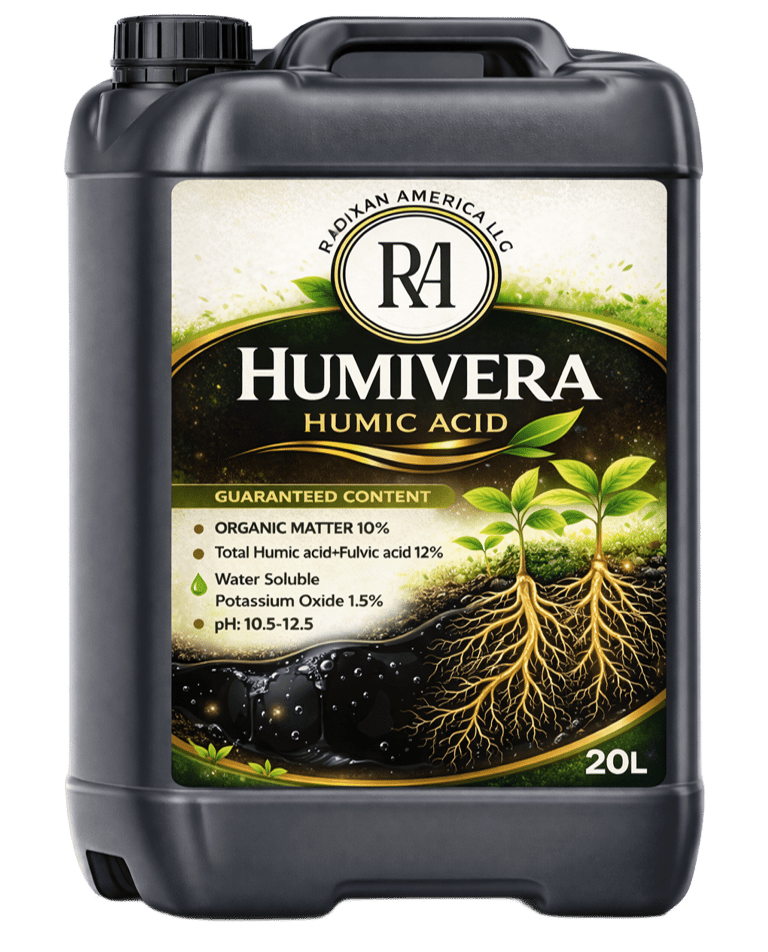
Humivera is recognized for its distinctive composition that plays a critical role in enhancing soil health and agricultural productivity. The analysis reveals that Humivera contains 10% organic matter, 12% total humic and fulvic acids, and 1.5% water-soluble potassium oxide. Each component serves a vital function in promoting optimal growth conditions for plants.
The 10% organic matter in Humivera acts as a fundamental building block for soil fertility. Organic matter contributes to the nutrient-holding capacity of the soil, enhancing its ability to retain moisture while providing a habitat for beneficial microorganisms. These microorganisms are essential for decomposing organic material, thus releasing nutrients that are readily available for plant uptake. A higher organic matter content leads to improved soil structure, promoting root development and overall plant health.
Furthermore, the 12% total humic and fulvic acids are paramount in humic substances, which have been shown to foster enhanced nutrient absorption and soil structure. Humic acids improve microbial activity, leading to healthier soil ecosystems. Meanwhile, fulvic acids facilitate the transport of nutrients and minerals, ensuring that plants have access to the essential elements required for growth. These humic substances also play a role in the chelation process, making it easier for plants to absorb nutrients from the soil, thus supporting improved crop yields.
Lastly, the inclusion of 1.5% water-soluble potassium oxide is vital for plant health. Potassium is a key macronutrient that regulates various physiological processes, such as photosynthesis, enzyme activation, and water balance within plants. The availability of potassium enhances stress resistance and promotes overall plant vigor, contributing significantly to better yields.
How Humivera Enhances Soil Fertility
Humivera plays a crucial role in revitalizing soil fertility through various mechanisms that foster an environment conducive to plant growth. One of the primary ways it enhances soil health is by increasing organic matter. The rich organic content provided by Humivera improves soil structure, leading to better aeration and water retention. As the soil holds moisture more effectively, crops benefit from a consistent water supply, essential for optimal growth and yield.
In addition to augmenting organic matter, Humivera optimizes pH levels within the soil. Soil pH is a critical factor influencing nutrient availability to plants. When soil pH is balanced, nutrients such as nitrogen, phosphorus, and potassium become more accessible, allowing for better plant uptake. The application of Humivera helps achieve this balance, ensuring that crops can thrive in a nutrient-rich environment.
The stimulation of root development is another significant aspect of how Humivera enhances soil fertility. Healthy root systems are vital for nutrient absorption and overall plant stability. Humivera increases the proliferation of beneficial microorganisms in the soil, which in turn promotes stronger root development. These microorganisms form symbiotic relationships with plant roots, aiding in the absorption of essential nutrients and water.
Real-life case studies have demonstrated the positive impact of Humivera on crop performance. For instance, farms that have integrated Humivera into their soil management practices have reported yields that exceed those in control plots by up to 25%. These improvements are attributed not only to enhanced nutrient availability but also to the resilience of the crops in adverse conditions.
Through its multifaceted approach to improving soil fertility, Humivera stands out as a valuable tool for sustainable agriculture, helping farmers achieve better crop yields while maintaining soil health over the long term.
Environmental Stress and Humivera's Role in Defense Systems
Plants are continually subject to various environmental stressors that can significantly impact their growth and overall health. These stressors include drought, salinity, and pest infestations, all of which can inhibit a plant's ability to thrive. Humivera emerges as a crucial ally in enhancing plant resilience against these adversities, facilitating natural defense mechanisms that promote survival and growth.
One of the remarkable features of Humivera is its ability to improve nutrient uptake efficiency. Through a well-balanced supply of essential nutrients, Humivera ensures that plants have the resources needed to bolster their immune responses. In conditions of drought, for instance, plants fortified with Humivera demonstrate improved water retention and utilization, allowing them to withstand prolonged periods of dry weather. This adaptability not only contributes to immediate survival but also supports long-term resilience against changing climatic conditions.
Furthermore, in environments with high salinity, the presence of Humivera aids in osmoregulation within plant cells, minimizing the adverse effects of salt stress. By enhancing the plant's ability to manage ionic balance, Humivera reduces the negative impact on growth and yield. Additionally, the natural compounds found in Humivera can deter pests and pathogens, thereby fostering an ecosystem that encourages healthy plant development.
The role of Humivera in establishing natural defense mechanisms cannot be overstated. By promoting robust nutrient uptake and improving stress resistance, it establishes a fertile ground for plants to thrive. Integrating Humivera into soil management practices not only enhances the vitality of plants but also aligns agricultural practices with sustainability, ensuring healthy production in challenging environments. As a result, Humivera stands as a beacon of hope for farmers and gardeners alike, offering a pathway to resilient agriculture in the face of environmental stressors.
Applications of Humivera in Various Fields
The concept of Humivera, representing the life-giving properties of enriched soil, has gained widespread recognition for its diverse applications in several fields, including agriculture, gardening, and even landscaping. Across these domains, Humivera plays a pivotal role in enriching soil health, maximizing crop yield, and enhancing plant vitality.
In professional agriculture, Humivera is utilized to improve soil composition by adding organic matter and essential nutrients. Farmers have reported significant increases in crop productivity when incorporating Humivera into their soil management practices. By promoting microbial activity and improving soil structure, Humivera enables better water retention and nutrient absorption, fostering healthier plants. For instance, vegetable growers have noted that applying Humivera can lead to superior growth rates and improved quality of produce.
In the realm of luxury lawn care, Humivera is appreciated for its ability to create lush, vibrant lawns. Homeowners and landscapers often integrate Humivera into their lawn treatments to establish a hardy root system and enhance resilience against environmental stressors. Additionally, users have experienced notable improvements in soil aeration and drainage, which are critical factors in maintaining an attractive lawn.
Furthermore, tailoring the application of Humivera to specific types of crops and soil conditions can yield optimal results. It is essential for users to conduct soil testing and consult best practices tailored to their specific environment. For example, in sandy soils, more frequent applications of Humivera may be necessary to maintain nutrient levels, while clay soils might benefit from less frequent, but more substantial applications.
By understanding the particular needs of their crops and the characteristics of their soil, users can maximize the benefits of Humivera, making it an indispensable tool across various fields.
Conclusion: The Sustainable Future with Humivera
The significance of Humivera in modern agriculture cannot be overstated. As a natural bio-stimulant, Humivera promotes healthier soil ecosystems, ultimately leading to higher crop yields and enhanced biodiversity. Farmers and agricultural practitioners are increasingly recognizing the role of bio-stimulants in achieving sustainable farming practices, and Humivera stands out as an effective solution. Its ability to improve soil structure, increase nutrient availability, and boost microbial activity highlights its importance as a strategy for sustainable agriculture.
Utilizing Humivera allows growers to address pressing agricultural concerns such as soil degradation and loss of fertility, which are critical issues in contemporary farming. By replenishing the soil with essential nutrients and organic matter, Humivera not only enhances plant growth but also contributes positively to the environmental health of farmland. This is particularly vital in the context of climate change, where resilient agricultural practices are paramount.
Moreover, the long-term benefits of incorporating Humivera into farming practices extend beyond immediate crop yield improvements. Sustainable cultivation fosters better carbon sequestration and helps mitigate the impacts of climate change. By creating a more balanced ecosystem, Humivera aids in the rejuvenation of soil health, ensuring that agricultural lands can continue to produce food sustainably for future generations.
Incorporating Humivera into an agricultural regimen not only supports current productivity but also aligns with a vision for responsible stewardship of natural resources. It is an essential component for those who aspire to create a sustainable agricultural framework that respects both the environment and the need for sufficient food production. Consequently, integrating Humivera into farming practices is a forward-thinking approach to securing the future of agriculture.