
Nano Core: Engineering the Future of Your Soil
blog-post-nano-core organic fertilizer granular, humic acid granular
Introduction to Nano Core
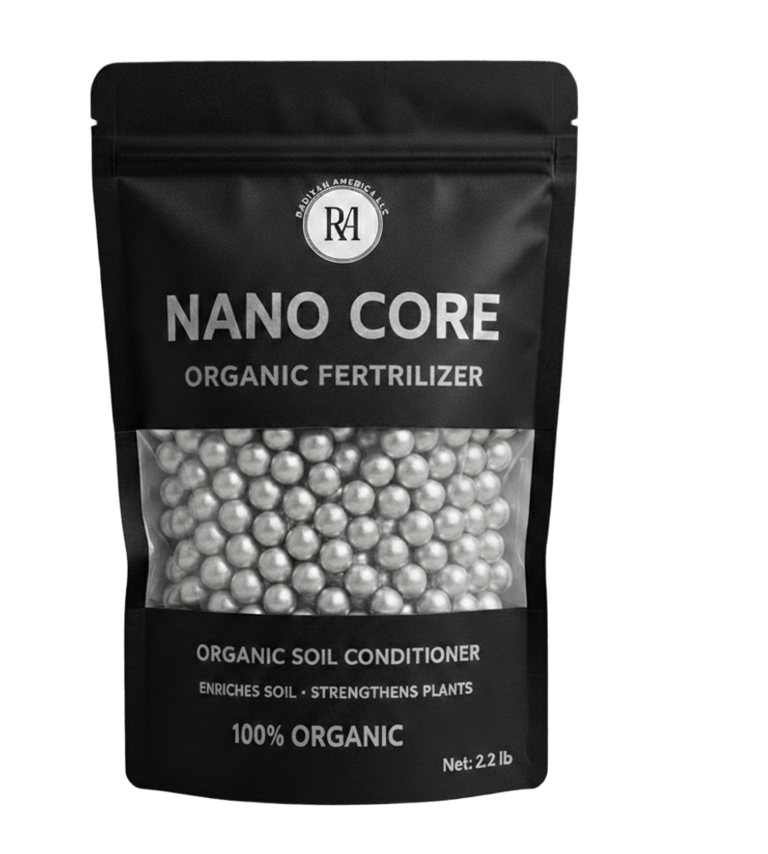
Nano Core represents a significant advancement in sustainable agriculture as a 100% organic soil conditioner. As environmental concerns surrounding traditional farming practices grow, the introduction of Nano Core offers farmers and gardeners a solution that not only meets their immediate nutrient requirements but also enhances the long-term vitality of the soil.
Unlike conventional synthetic fertilizers, which often deplete soil health over time due to their chemical compositions, Nano Core is formulated using natural ingredients that restore and rejuvenate soil ecosystems. These synthetic fertilizers can sometimes lead to soil compaction and nutrient runoff, causing detrimental effects on water sources and the overall environment. In contrast, Nano Core acts by improving the soil structure, enhancing water retention, and promoting microbial activity, thereby fostering a healthier and more resilient soil environment.
The organic ingredients in Nano Core support sustainable agricultural practices by providing essential minerals and nutrients that are readily available to plants. This organic approach not only eliminates the harmful side effects associated with chemical fertilizers but also encourages the establishment of a balanced and diverse soil microbiome. As a result, farmers can enjoy improved crop yields and better quality produce without compromising soil health.
Furthermore, the use of Nano Core aligns with global movements towards eco-friendly agricultural methods. By integrating this organic conditioner into their practices, farmers are taking proactive steps to mitigate the negative impacts of conventional agriculture while promoting sustainability. Consequently, the adoption of Nano Core symbolizes a shift towards more responsible and environmentally-friendly farming, ensuring future generations can benefit from robust and fertile soil.
The Science Behind Nano Core
Nano Core harnesses the power of humic and fulvic acids, which are organic compounds naturally found in soil. These substances play a crucial role in enhancing nutrient bioavailability, making them vital for soil health and plant growth. Humic acids provide a rich source of nutrients while simultaneously improving soil structure, promoting aeration, and encouraging water retention. Fulvic acids, on the other hand, are smaller in molecular size, allowing them to penetrate plant membranes more easily, thereby facilitating efficient nutrient transport and assimilation at the cellular level.
The high concentration of these acids within Nano Core is purposeful; they work in tandem to create an optimal environment for soil microorganisms. These beneficial microbes, when supported by humic and fulvic acids, can thrive, multiply, and contribute to the overall nutrient cycling process. As microbes break down organic matter, they release additional nutrients that plants can readily absorb. This enhanced microbial activity also mitigates soil compaction and increases nutrient accessibility, ensuring that plants receive the essential elements required for robust growth.
Moreover, the presence of humic and fulvic acids in Nano Core promotes chelation, a process where these substances bind to nutrients such as potassium, calcium, and magnesium, preventing them from becoming unavailable to plants due to soil chemistry. This chelation process not only enhances nutrient uptake but also aids in retaining moisture in the soil, which is increasingly important in an era of climate variability.
By focusing on the scientific principles behind Nano Core’s formulation, we can better appreciate how its constituents foster healthier soil ecosystems. The careful balance of humic and fulvic acids demonstrates a commitment to sustainable agricultural practices, ultimately leading to enhanced crop yields and soil regeneration for future generations.
Benefits of Using Nano Core
The integration of Nano Core into agricultural practices brings forth a multitude of benefits that significantly enhance soil health and crop productivity. One of the primary advantages is the improvement in soil structure. Nano Core works at a microscopic level to enhance the soil's physical properties, resulting in improved aeration and water retention. This leads to a more robust root system, allowing plants to better access essential nutrients and minerals, ultimately fostering healthier growth.
Additionally, using Nano Core has been shown to increase plant resilience. By fortifying the soil biology, plants can better withstand stressors such as drought, pests, and diseases. When plants are supported by a healthy soil ecosystem enriched with Nano Core, they exhibit improved vigor and higher yields. The resilience provided by this innovative solution translates to a more sustainable farming practice, key in maintaining food security in an ever-changing climate.
Furthermore, one of the most compelling benefits of utilizing Nano Core is the reduction in reliance on harsh chemicals. Traditional agricultural methods often involve the application of synthetic fertilizers and pesticides that can be detrimental to both the environment and human health. Nano Core offers a natural alternative that enhances nutrient availability and microbial activity within the soil without the need for these harsh substances. This not only contributes to an eco-friendly approach to farming but also helps in safeguarding biodiversity and promoting a healthier ecosystem.
By adopting Nano Core, farmers can improve soil health, boost plant resilience, and reduce chemical inputs, marking a significant step towards sustainable agricultural practices that benefit both producers and the planet.
Application Techniques for Optimal Results
In the realm of soil enhancement, effective application techniques for Nano Core are integral to maximizing its potential benefits. One of the standout features of Nano Core is its advanced pelletized form, which facilitates ease of application. This formulation ensures that the product is not only easy to handle but also promotes uniform soil integration. The pelletized structure allows for even distribution across various soil types, enhancing nutrient absorption and fostering a healthier ecosystem.
Precision application methods are key when utilizing Nano Core. Techniques such as variable rate application can be employed to tailor the dosage to specific areas of the field based on soil nutrient profiles. Using technology such as GPS-guided machinery helps ensure that Nano Core is applied where it is needed most, reducing waste and optimizing resource allocation. Such precision application not only supports sustainability practices but also preserves farmer inputs while enhancing crop yield.
Timing and dosage are critical components to consider for achieving the most impactful results when applying Nano Core. It is advised to apply the product during the crop’s critical growth stages, as this is when nutrient availability can significantly affect plant development. The recommended dosage may vary depending on soil conditions and crop requirements; accordingly, soil testing is encouraged to determine the ideal application rate uniquely suited to specific agricultural contexts.
By adhering to these application techniques, farmers and agricultural professionals can unlock the full potential of Nano Core, fostering robust plant health and ultimately, greater agricultural productivity. Through strategic planning and informed application, the benefits of Nano Core can be realized in various farming practices, contributing to enhanced soil quality and crop resilience.
Success Stories: Farmers Who Thrive with Nano Core
In the agriculture industry, success stories offer invaluable insights into the effectiveness of innovative practices. Many farmers who have adopted Nano Core for soil management have witnessed remarkable transformations in their practices, and their testimonials serve as a powerful testament to the product's capabilities.
For instance, John Smith, a corn and soybean farmer in Iowa, reported a dramatic improvement in his soil health after implementing Nano Core into his routine. Prior to using the product, John's soil exhibited low nutrient retention and poor microbial activity, leading to suboptimal yields. Post-implementation, he observed a significant increase in nutrient availability and microbial diversity within the soil. As a result, his corn yields improved by 30% and his soybean crops experienced a similar enhancement. John credits Nano Core with revitalizing his soil, which in turn has fueled his farm’s overall productivity.
Similarly, Maria Gonzalez, an organic vegetable grower in California, shared her experience with Nano Core. Faced with challenges related to soil erosion and nutrient depletion, Maria decided to integrate Nano Core as part of her soil management strategy. After a season of use, she noted a remarkable reduction in soil erosion, improved moisture retention, and healthier root systems in her crops. Her clients have been delighted with the quality of organic produce, evidenced by a 40% increase in sales. Maria emphasizes how Nano Core has not only improved her soil condition but also enabled her to meet increasing consumer demand for high-quality organic vegetables.
These anecdotes illustrate the profound impact of Nano Core on agricultural practices. Farmers who have embraced its application have experienced not only enhanced soil health but also increased crop yields and economic viability. Such transformations underscore the importance of innovative soil management solutions in modern agriculture.
Environmental Impact of Nano Core
The adoption of Nano Core in agricultural practices presents significant environmental advantages when compared to traditional synthetic fertilizers. One of the foremost benefits is its potential to promote sustainable agriculture. Unlike conventional fertilizers, which often rely on high concentrations of chemicals, Nano Core utilizes nanotechnology to optimize nutrient delivery to crops. This method ensures that plants receive essential nutrients in a more efficient manner, reducing the overall quantity of fertilizers applied. As a result, soil health improves, and the ecosystem experiences less strain from excess chemical inputs.
Moreover, Nano Core fosters enhanced biodiversity within agricultural landscapes. When applying traditional fertilizers, the risk of nutrient leaching and runoff can lead to hazardous conditions in nearby waterways. Such runoff contributes to algal blooms and depletes oxygen levels, harming aquatic life. In contrast, the precision application enabled by Nano Core minimizes the likelihood of such negative environmental impacts, thereby improving water quality and supporting the overall biodiversity of local ecosystems. Plants thrive in these improved conditions, fostering a resilient ecosystem that supports various species.
Furthermore, the environmental profile of Nano Core includes a reduction in chemical runoff. Traditional fertilizers not only harm crops but also negatively affect soil composition by disrupting the natural microbial balance. The innovative formulation of Nano Core enhances nutrient absorption at the root level, ensuring that nutrients are utilized effectively. This targeted approach not only decreases the potential for harmful leaching but also supports soil sustainability, ensuring that agricultural practices can continue to thrive without compromising the integrity of the environment.
Future Perspectives: The Role of Nano Core in Sustainable Agriculture
As the global population continues to rise, the demand for sustainable agricultural practices becomes ever more pressing. Nano Core, with its innovative soil conditioning technology, stands poised to play a pivotal role in meeting these challenges. The future of agriculture increasingly relies on advancements that prioritize both productivity and environmental stewardship, and Nano Core exemplifies this shift towards organic solutions.
Employing super-fine particles, Nano Core helps to enhance soil health by improving its physical, chemical, and biological properties. This technology is designed to facilitate better nutrient absorption and retention, thus significantly reducing the need for chemical fertilizers that often lead to soil degradation and water contamination. As adoption of Nano Core technology expands, it is anticipated that soil quality will improve, promoting more resilient crop growth without compromising ecological integrity.
Moreover, the integration of Nano Core into agricultural systems aligns with the broader goals of sustainable development. With climate change and environmental challenges at the forefront, farmers are increasingly embracing practices that contribute to long-term soil fertility and ecosystem balance. The micro and nano-scale approaches provided by Nano Core not only enhance resilience against extreme weather conditions but also enable farmers to optimize their input costs while maximizing yield.
Looking ahead, collaborative research and innovation in soil conditioning technologies, such as those offered by Nano Core, will likely lead to more effective agricultural strategies. By promoting organic and technologically advanced soil solutions, the agricultural sector can rise to meet the demands of food production sustainably. Thus, embracing Nano Core may prove essential in fostering a sustainable agricultural landscape, ensuring food security for future generations while preserving the environment.